
The India-US trade deal has offered a much-needed breather for the Indian information technology (IT) industry, which has been grappling with global macroeconomic uncertainty and subdued client spending over the past few years.

The BSE Smallcap index hit an over eight-month low of 47,627.96, falling 3 per cent in Tuesday's intraday trade amid selling pressure due to ongoing tariff-related concerns and rising geopolitical tensions.

Analysts have sharply reduced cigarette maker ITC's earning estimates for the next two years, fearing a significant dent in the company's profitability and margins. This is owing to a steep hike in excise duty on tobacco by the government.

Worries about global politics and trade are pulling the Nifty 50 down. Experts say the market could drop further low.
The Iran conflict led to a sharp correction in Reliance Industries Ltd's (RIL's) share price, which has been partially reversed by a rebound.

'The next two to three weeks will not be decided in Washington.' 'They will be decided in Tehran, in whatever calculation Iran makes about the costs of continued resistance against the costs of appearing to have yielded.'
The loss of input tax credit (ITC) following the rationalisation of the goods and services tax (GST) on individual life and health insurance from 18 per cent to nil is may weigh on the profits of life insurers in the third quarter (Q3) of 2025-26 (FY26).
Bank lending to companies is expected to go up in the coming quarters because the difference in interest rates between corporate bonds and bank loans has narrowed. In addition, recent policy reforms by the Reserve Bank of India (RBI), including allowing domestic banks to do acquisition financing, are expected to give further support to corporate lending, analysts said.

Stock market benchmarks ended with losses for the third straight session on Wednesday as heightened geopolitical tensions, weak global peers and persistent foreign fund outflows unnerved investors.

Silver and gold prices declined sharply in the futures trade on Friday as traders booked profits at elevated levels after a record-breaking rally, tracking a bearish sentiment in global markets and a rebound in the US dollar.
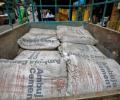
Investors have put money in Ambuja Cements shares as the cement major has moved to consolidate its operations. The Adani Group company has proposed to merge its subsidiaries ACC and Orient Cement into the parent entity.

Buoyant domestic sales are expected to lift revenues for pharma companies by 8-11 per cent in Q3FY26, even as declining generic Revlimid (cancer drug) sales in the US remain a key drag. Most brokerages forecast a modest 2-4 per cent growth in profit after tax (PAT) for the quarter. Hospitals and diagnostics companies, meanwhile, are likely to post much stronger numbers, with revenues seen growing 20-22 per cent year-on-year (Y-o-Y).

The purge in Washington does not pause the war. Strikes continue, Hormuz remains closed, and Brent crude is still dancing around $109 a barrel. For India, the command chaos in the Pentagon is another layer of uncertainty piled on five weeks of conflict that was already straining every buffer Delhi has.

Shares of electric vehicle (EV) maker Ola Electric Mobility fell nearly 7 per cent to a fresh low on Monday after its revenue growth in the third quarter (October-December/Q3) of 2025-26 (FY26) slowed, with analysts warning that any turnaround could be prolonged.

While Infosys never had a presence, Wipro's Venezuelan unit was liquidated many years ago.

'The problem is not just slower growth, but also the quality of growth.'

Weakness in the information technology (IT) sector hiring has weighed on Info Edge (India) over the past year, leading to a 13 per cent correction in the stock during this period. While the company's 2025-26 (FY26) third-quarter (October-December/Q3) performance showed a marginal improvement, brokerages believe the IT hiring outlook remains weak due to macroeconomic uncertainty in the US.
The new labour Codes, notified by the central government in November 2025, have pushed up employee costs for private-sector banks and insurance companies, with these firms reporting higher operating expenses in the October-December quarter (Q3FY26) due to the statutory impact of the new labour Codes.

HCLTech expects its recent large acquisitions to contribute about 1.5 per cent to revenue in 2026-27 (FY27), Chief Executive Officer and Managing Director C Vijayakumar said, as the company looks to build newer revenue streams in a subdued macroeconomic environment.

The United States, which entered this war in expectation of a short, sharp win along the Venezuela model, is now preparing for deeper involvement in a conflict it does not fully control, without the allies it typically relies on, against an adversary that is not behaving as expected, in a global environment that is already absorbing economic shock. Prem Panicker continues his must read daily blog on the Gulf War.

The Nifty IT index hit a more than nine-month low, trading at its weakest level since April 17, 2025.

New investors should enter gradually and with a long horizon. 'Staggered investment through systematic purchase plans is advisable rather than lump-sum buying.'

Digital healthcare platform Practo is targeting annualised gross merchandise value (GMV) of $1 billion by June 2026, with its expanding US operations expected to contribute between $250 million and $300 million, according to people familiar with the company's plans.

Shares of Reliance Industries Limited (RIL) tumbled on Tuesday, posting its biggest single-day decline in 19 months, amid controversy over its purchase of Russian oil and profit-booking after recent gains.

Stock markets closed higher for the second straight session on Tuesday, driven by gains in bank, IT and capital goods shares.

India's third-largest telecom operator Vodafone Idea (Vi) has secured a 10-year breather on adjusted gross revenue (AGR) payments from the Department of Telecommunications (DoT). This is expected to ease pressure on its balance sheet and enable the company to raise bank debt for capital expenditure.

Dr Reddy's Laboratories (DRL) share price plunged 6.66 per cent to Rs 1,203.50 per share on the NSE during Friday after analysts remained cautious on the company's Q3 performance and differed on its growth outlook. DRL's Q3 performance was viewed as subdued by some analysts when they adjusted it for one-time grants and incomes that the company received during the quarter.

Benchmark stock indices Sensex and Nifty dived sharply by nearly 2 per cent on Sunday after Finance Minister Nirmala Sitharaman proposed a hike in the Securities Transaction Tax (STT) on derivatives. Reversing the early gains, the 30-share BSE Sensex plunged sharply by 2,370.36 points or 2.88 per cent to slide below the 80,000-mark at 79,899.42 in afternoon trade as the finance minister announced a hike in STT on futures contracts to 0.05 per cent from the current 0.02 per cent.

The country's largest IT services company TCS on Monday reported 13.91 per cent decline in December quarter net profit at Rs 10,657 crore. The Tata Group company had posted a net profit of Rs 12,380 crore in the October-December period of FY25 and Rs 12,075 crore in the preceding September quarter.

The Reserve Bank of India's (RBI's) draft guidelines on gold loans, if implemented in their current form, are expected to impact non-banking financial companies (NBFCs) and mid-tier banks in the near term, more significantly than larger banks, according to analysts.

Taking Kharg would give the US control over virtually all of Iran's oil exports and thus provide significant leverage, notes Prem Panicker in his must read daily blog on the Gulf War. It would also put American troops within range of Iran's remaining missiles, drones, and artillery on a piece of real estate that is just eight square miles in size, and just 15 miles from the Iranian mainland.

A host of macroeconomic data announcements, global trends and trading activity of foreign investors would dictate investors' sentiment in the stock market this week, analysts said. Besides, auto sales data will be closely tracked, experts noted.

Coforge's planned $2.35 billion all-stock acquisition of US-based Encora has divided the Street, with a few brokerages terming it a "strategically positive" but execution-heavy bet while others raising valuation concerns.

The Milano Cortina Winter Olympics commenced with a vibrant opening ceremony, showcasing Italian culture and athletic spirit, while also highlighting global political tensions through crowd reactions and protests.

Cleaner balance sheets, regulatory support and strong growth prospects helped Indian private banks attract over $6 billion in foreign capital, with more deals expected in 2026.

Shares of Dr Reddy's Laboratories jumped 5.3 per cent on Thursday to Rs 1,217 apiece, making it the top gainer in the Nifty 50 and the BSE 100 indices. By comparison, the Nifty 50 was up 0.53 per cent at 25,289.

Life Insurance Corporation of India (LIC) reported encouraging results for the April-June quarter (Q1) of FY26. The net premium income of India's largest life insurer was Rs 1.2 trillion, up 5 per cent year-on-year (Y-o-Y), in Q1. Renewal premium grew 6 per cent Y-o-Y to Rs 59,900 crore, while first-year and single premium grew 1 per cent and 4 per cent Y-o-Y respectively to Rs 7,500 crore and Rs 51,900 crore.

'The first time India has seen two consecutive blockbuster IPO years.'

Companies are squeezing more profits from their operations relative to the capital they put to work, the highest now since 2011. Profit after tax relative to capital employed came in at 10.47 per cent in September, shows data from the Centre for Monitoring Indian Economy (CMIE), higher than the 8.41 per cent seen in September last year. This is the highest since March 2010.

Israel and the United States had a plan. Iran punched back. And now the Gulf is reeling, the world is beginning to feel the pain and, as on date, no one in Washington or Tel Aviv appears willing to admit that the punch has landed, notes Prem Panicker, continuing his must-read blog on the war in the Middle East.
